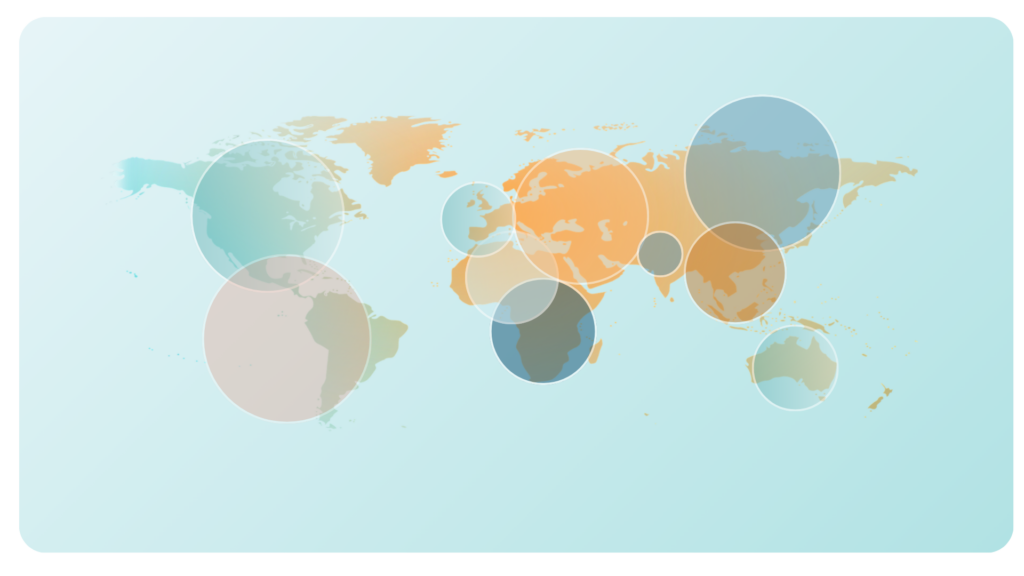
Together, these clusters tell a powerful story:
- Searching in the Sahel and Beyond: Faith is central to daily life, but poverty, limited education, and low access to technology make engaging with Scripture difficult in this region. There is deep spiritual hunger, and many are open to learning, especially through relationships and shared conversations.
- Faith in Decline, Warmth Remains: Across Eastern and Southern Europe, Christianity is still part of cultural identity, even as church attendance declines. Many people respect the Bible and are open to learning more, even if faith is no longer central to their daily lives.
- Faith under Pressure: In parts of the Middle East, North Africa, and Central Asia, faith shapes identity, but expressing belief openly can be restricted. Even so, there is quiet curiosity, and trust is often built through relationships and personal integrity.
- The Vibrant Yet Shifting Church: In regions like Latin America and the Philippines, faith is strong and expressive but evolving. Many are engaged with Scripture, yet younger generations are searching for deeper meaning beyond tradition.
- The Secular West: The Bible is often viewed more as a cultural influence than a source of truth. While belief in God is declining, many still value its moral teachings—especially for children.
- The Unaware Majority: Across much of Asia, many people have never encountered the Bible at all. Christianity is often unfamiliar, making awareness and introduction the first step toward engagement.
- Africa’s Confident Faith: The Bible is deeply embedded in daily life. Faith is vibrant and widely practiced, but there is still a need to help believers grow deeper and connect their faith to real-life challenges.
What emerges is not a single global trend but a mosaic of spiritual realities.
What Surprised Us Most
Despite these differences, several patterns stand out.
First, faith still matters. In most parts of the world, belief in God continues to shape how people think and live.
Second, Bible engagement hasn’t disappeared—it’s simply uneven. In regions like Latin America and sub-Saharan Africa, Scripture is often read, shared, and discussed openly in community. In other places, engagement is quieter—or fading.
And perhaps most surprising: Even in highly secular or nonreligious societies, people overwhelmingly agree that “it is good for children to know Bible stories.”
That insight opens a powerful door.
But the research also highlights two growing challenges:
- In some places, like the West, the Bible feels irrelevant.
- In others, like much of Asia, it’s simply unknown.
Yet the door is not closed. Notably, 11% of non-Christians worldwide say they are open to learning more about the Bible, a reminder that curiosity still exists beneath the surface.
How OneHope is Responding
For OneHope, research like this shapes our posture.
It reinforces something we already believe: effective ministry begins with listening.
By understanding where people are—whether encountering the Bible for the first time or growing deeper in faith—we can design programs that meet real needs of children and youth. That means recognizing that impact won’t look the same everywhere. In some communities, the first step is simply building awareness of the Bible. In others, it’s helping young people grow deeper in their faith or equipping leaders to disciple the next generation. This research reminds us that effective ministry begins by meeting people where they are, not where we assume them to be.
As more insights from the Patmos Initiative are released, they will continue to guide how we listen, learn, and adapt. We encourage you to explore the seven global “clusters” and consider which best reflects your community’s posture toward Scripture.
For an easy entry point, OneHope’s Research Radar review highlights the key takeaways and summaries, turning complex data into practical insights you can use.
Ultimately, Patmos is more than research. It’s an invitation to listen more carefully and to share God’s Word in ways that truly resonate across every culture and context. Because when we see people more clearly, we can serve them more faithfully.
Share this story to help others understand how research is shaping the future of global mission.

OneHope Team



Leave a Reply